


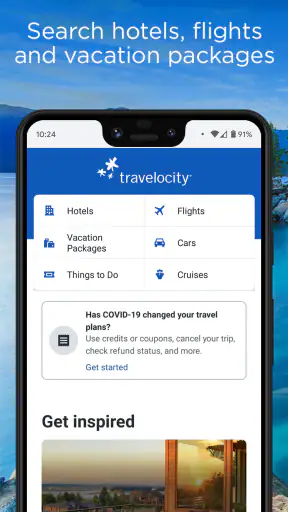
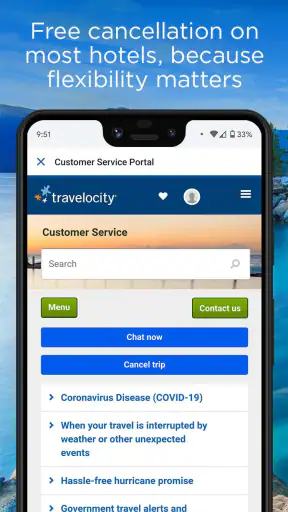

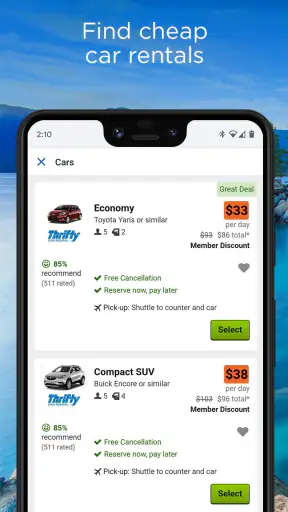
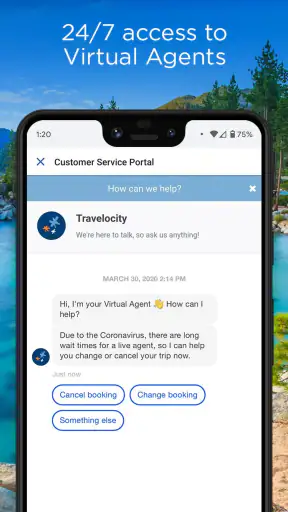
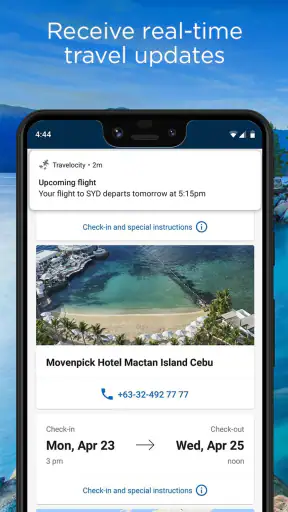
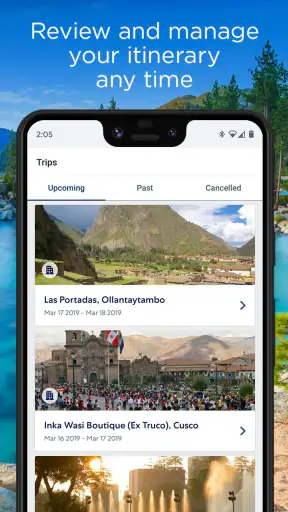
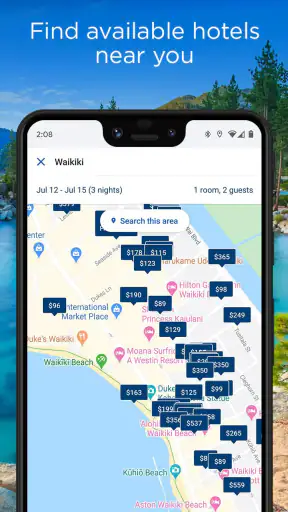
When I plan a trip, I usually want two things first: a realistic flight option and a hotel that does not force me to jump between several travel websites. Travelocity Hotels & Flights is built around that simple starting point. It is a free Travel & Local app from Travelocity.com, aimed at finding flight deals and booking selected hotels. I found it most useful as a quick comparison tool rather than as a complete replacement for every travel service I might need.
The important question is not whether it can help with travel searches; it can. The better question is whether its particular approach suits the way you book. If you prefer checking a few options on your phone, keeping the search process focused, and making a decision without opening a dozen browser tabs, it has a clear appeal. If you need a very specialized hotel, complicated multi-stop planning, or the broadest possible choice of booking channels, another type of travel service may fit you better.
How I Judge a Travel App Before Booking
I start with the basics: can I enter a trip quickly, understand the results, compare the important details, and reach the booking stage without confusion? A travel app can show attractive prices and still be frustrating if dates, airports, room choices, or restrictions are difficult to interpret. For me, clarity matters as much as the first price I see.
I also look at the app's role in the wider booking process. Travelocity Hotels & Flights is not something I would treat as a travel agent that solves every part of a journey. Its main value is concentrated in searching for flights and finding select hotel options. That makes it a practical first stop, but I still read the final conditions carefully before committing to anything.
Another decision point is how flexible my plans are. A traveler with fixed dates and a known destination can use a focused search app efficiently. Someone who is still deciding between several cities may get more value from a broader trip-planning service, a map-based hotel search, or direct research with airlines and hotel companies. The right choice depends on whether speed or depth is more important for this particular trip.
The app has been available since June 30, 2011, so it is not a new experiment in the travel category. Its current version is 2026.34.0 and it requires operating system version 10 or later. That last point is worth checking before a trip: an older phone may not be able to install or update it, which is an avoidable problem if you are trying to search while already away from home.
Travelocity Hotels & Flights is free to install and carries an Everyone age rating. Its public standing is strong, with a 4.7 average from around fifty thousand ratings and more than five million installs. Those figures do not guarantee that every search or booking will feel perfect, but they do suggest that the app has become a familiar option for a substantial number of travelers.
What I Check During a Real Search
My first check is whether the search results help me compare like with like. A low headline fare is not automatically the best choice if the schedule is awkward or the hotel details do not match what I need. I pay attention to the practical shape of the trip: departure and arrival times, airport choices, the number of stops, and whether the hotel location makes sense for my plans.
I also separate discovery from commitment. I am happy to use the app to narrow down choices, but I do not rush through the final booking screen. Before paying, I review the selected dates, travelers, room type, and the terms displayed for that option. This habit is especially useful when a search includes several similar-looking hotels or flights, because small differences can matter more than the initial price.
A useful workflow is to search first with the dates and destination I actually want, then repeat the search with a small amount of flexibility if my schedule allows it. I do not assume that changing a date will always improve the result, but it can reveal whether I am paying a premium for a specific day. This is a better use of the app than simply opening it once, choosing the first attractive result, and closing the process.
For hotels, I treat the word “select” seriously. The app is intended to book selected hotels, not to promise that every property in every destination will appear. If the place I want is missing, I do not waste time repeatedly adjusting filters and hoping it will emerge. I move to a broader hotel search or check the property directly. That is one of the clearest boundaries of the app.
A Practical Weekend Scenario
Imagine I am arranging a short weekend visit to another city. I know the destination and the dates, but I have not chosen between arriving early at a cheaper airport or paying more for a convenient schedule. I can use Travelocity Hotels & Flights to put the flight options beside the hotel possibilities and build a rough picture of the total trip.
In that situation, I would first identify flights that leave enough time for the purpose of the visit. A very early arrival may look efficient but could add transport or waiting time. After that, I would compare hotels by location and suitability rather than choosing only the lowest displayed option. A hotel that saves money but creates a long daily commute may not be the bargain it appears to be.
Before completing the booking, I would take a moment to verify the traveler information and the exact travel dates. I would also save the booking details in a place I can reach without relying entirely on memory. The app can make the search more convenient, but it does not remove the need for basic trip organization.
That workflow shows where the app fits best: it reduces the effort of getting from “I need a flight and somewhere to stay” to a manageable shortlist. It does not make the judgment for me. I still have to decide whether the schedule, location, and terms suit the real reason I am traveling.
Where Travelocity Hotels & Flights Works Best
The strongest part of the experience is its focused purpose. Rather than presenting itself as a general travel notebook, it puts attention on flight deals and hotel booking. I like that when I already know the destination and want to move quickly from a broad idea to concrete options.
It is particularly convenient for travelers who normally search on a phone. A mobile app is easier to use on a train, during a lunch break, or while discussing plans with someone else than a collection of desktop tabs. I can begin with a simple search, compare the available choices, and return to the task later instead of rebuilding the whole process from memory.
Another strength is the possibility of considering air travel and accommodation as connected decisions. A flight time can affect where I want to stay, while a hotel location can affect which airport is practical. Even when I eventually use another source for confirmation, starting with both parts of the trip in one place helps me avoid planning them in isolation.
My biggest practical tip is to use the app for narrowing choices, not for switching off your judgment. Search results are a starting point. I compare the actual timing and location with the purpose of my journey, then inspect the final details before booking. This approach gets the convenience without treating the first result as an automatic recommendation.
Good Uses Beyond a Simple Vacation
The app can also suit a last-minute work trip when the destination and dates are already known. In that case, I value a short path to a usable flight and a hotel in an appropriate area. I am less interested in browsing endlessly and more interested in reducing the number of decisions I have to make after a busy day.
It is useful for a family member who wants a straightforward starting point but does not enjoy researching travel across many websites. I would still help that person check the final details, especially if the trip involves multiple travelers or a hotel requirement such as a particular room arrangement. The app can simplify the search without making every travel detail equally simple.
It can also help when I am comparing the cost of traveling at different times. I might search the preferred dates, then test an alternate departure or return day. The insight is not just “find the cheapest result”; it is seeing whether a small schedule change produces a meaningful improvement without damaging the trip.
One less obvious advantage is that a focused app can expose poor assumptions early. If the available hotel choices are far from the area I need, or the flight schedules make a short stay impractical, I learn that before spending time planning the rest of the itinerary. That makes it useful as a feasibility check, even when I do not ultimately book through it.
Where the Experience Can Feel Limited
The same focus that makes the app approachable can feel restrictive for complex travel. I would not make it my only tool for a journey involving several destinations, unusual transport connections, or highly specific accommodation requirements. A broader travel platform or direct research may provide a better overview in those cases.
Hotel availability is another practical limitation. Because the service covers selected hotels, the result set may not include the property or neighborhood I have in mind. That is not necessarily a defect in the app, but it changes how I use it. I treat an empty or narrow result as a reason to widen my search elsewhere, not as proof that the destination lacks suitable rooms.
I also would not use it as a substitute for reading the details of a booking. Travel searches can look simple while hiding important distinctions between similar options. I check the dates, airports, room selection, and the conditions shown before I confirm. Anyone who prefers a fully guided process with every possible rule surfaced immediately may find that direct airline or hotel booking feels more reassuring.
There is also a trade-off between convenience and control. A travel app can save time by bringing options together, but a direct booking channel may be preferable when I already know exactly which airline or hotel I want, need to manage a loyalty relationship, or want to deal with a provider without an intermediary. In those situations, the extra search step in Travelocity Hotels & Flights may not add enough value.
How It Compares with the Usual Alternatives
Compared with booking directly through an airline, this app is better for initial comparison across flight possibilities. Direct airline booking can be the better finish when I have a preferred carrier, a complicated itinerary, or a reason to keep the booking relationship as simple as possible. I see the two approaches as complementary rather than mutually exclusive.
Compared with a hotel-only service, Travelocity Hotels & Flights is more convenient when I need to think about the flight and accommodation together. A hotel specialist may be more useful when the property itself is the main decision, especially if I want to explore a large range of room types, locations, or property styles.
Compared with a broad travel marketplace, Travelocity's focused approach may feel less overwhelming. A larger marketplace can be better for travelers who want to compare many travel components or a very wide range of properties. I prefer Travelocity Hotels & Flights when I want a shorter path to the basic flight-and-hotel decision.
Compared with a traditional desktop browser, the app's advantage is convenience during everyday moments. The browser may still win on a larger screen, especially when I am comparing several tabs, checking maps, or coordinating a detailed itinerary. The app is strongest when the task is focused enough to complete comfortably on a phone.
The Real Cost of Changing Your Booking Habit
Moving from a familiar booking method has a small learning cost. I need to remember where I normally check details, how I store confirmations, and which parts of the trip I prefer to handle directly. That cost is worthwhile only if the app saves enough time or makes comparison easier for my particular travel style.
If I already have a reliable direct-booking routine, I would not switch everything immediately. I would use Travelocity Hotels & Flights for one search, compare its shortlist with my usual options, and see whether it improves the decision rather than merely adding another place to check. This trial approach avoids turning a simple trip into a comparison project.
For a traveler who usually opens many separate sites, the switch may be easier to justify. The benefit is not necessarily finding a dramatically different result every time. It can be the reduction in repeated searches and the ability to consider flights and hotels in one focused workflow.
There is also a habit cost after booking. I still need to keep track of the confirmation, check the itinerary before departure, and know where to go if a change becomes necessary. An app can organize the booking process, but I do not assume that it eliminates all follow-up work. I keep important travel information accessible outside the app as a sensible backup.
Who Should Use It and Who Should Skip It
I recommend trying Travelocity Hotels & Flights if you know your destination, want to compare flights, and need a hotel from a selected range of properties. It is a good match for short leisure trips, straightforward work travel, and phone-first planning. The free price also makes it easy to test without committing money merely to access the search experience.
I would be more cautious if your trip depends on a very particular hotel, an unusual itinerary, or detailed control over every booking relationship. In those cases, a direct airline or hotel app, a broader travel marketplace, or a desktop-based research process may be a better primary choice. You can still use Travelocity as an additional comparison point, but I would not rely on it alone.
I would also skip making it the center of planning if I am still deciding among many destinations. Its value becomes clearer once I have a concrete place and approximate dates. Before that stage, a destination-planning tool or general research may help me make the larger decision first.
My Recommendation After Using It
Travelocity Hotels & Flights is best understood as a practical first-stop travel app. I like it for turning a known destination and date range into a manageable set of flight and selected hotel possibilities. It is free, mature, easy to justify as a comparison tool, and well suited to travelers who want to do the early planning from a phone.
I would not present it as the universal answer for every booking. Its hotel coverage is not the same as an all-property search, and complex trips may require more specialized tools. The final decision should still come from checking the schedule, location, traveler details, and booking conditions rather than trusting a headline result.
My honest recommendation is to install it when your next trip is relatively straightforward and use it as a disciplined shortlist builder. Search with realistic dates, test flexibility only when your schedule allows it, compare the hotel location with your actual plans, and verify everything at the final step. If that process matches the way you travel, Travelocity Hotels & Flights can save time without taking away your control.
For me, that balance is the reason to keep it available: not because it replaces every airline, hotel, or travel marketplace, but because it gives a focused way to begin. When the trip is simple, that focus is a genuine advantage. When the trip is specialized, I would pair it with a more direct or broader alternative.


